Structural bed bug eradication in the Mojave Desert demands precise thermodynamic control because regional architecture in areas like Summerlin, Queensridge, and Peccole Ranch frequently utilizes dense drywall layering…
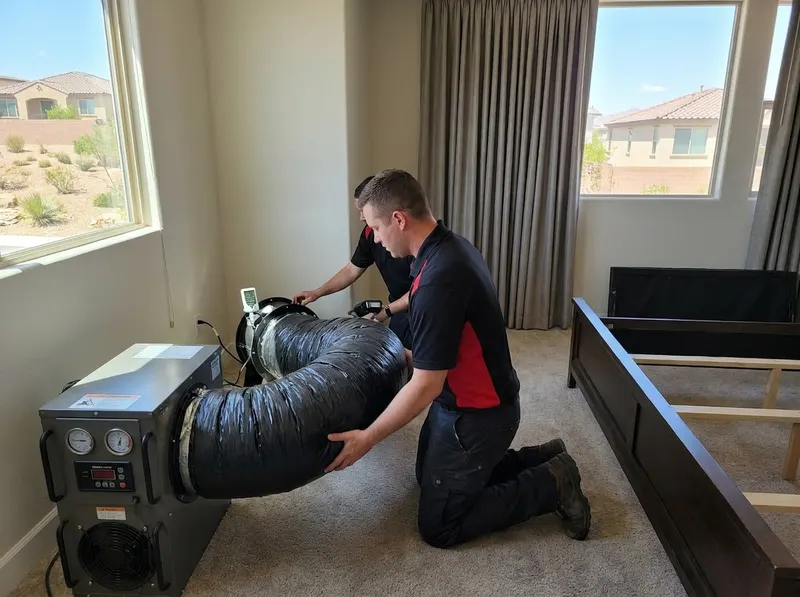
Structural bed bug eradication in the Mojave Desert demands precise thermodynamic control because regional architecture in areas like Summerlin, Queensridge, and Peccole Ranch frequently utilizes dense drywall layering and insulated perimeter stucco that retain micro-harborages. Standard broadcast chemical sprays frequently fail due to documented pyrethroid resistance in urban Nevada bed bug strains. Thermal remediation bypasses biological resistance entirely: when ambient air reaches 125°F, insect cellular proteins denature within 15 minutes, neutralizing adults, nymphs, and desiccation-resistant eggs sealed inside mattress seams or subfloor expansion joints. The operational trade-off of structural heat involves pre-treatment preparation labor; while conventional liquid spot applications require less initial item clearing, they necessitate multiple return visits over a 30-day hatching cycle. Heat achieves complete eradication in an eight-hour deployment window.
Technicians position industrial electric or indirect-fired gas heating units outside the residential perimeter, ducting forced hot air through heavy-duty thermal sleeves into specific zones. High-velocity axial fans circulate air continuously to eliminate cool pockets along exterior slab foundations, which are common in Skye Canyon and Centennial Hills slab-on-grade foundations. Wireless thermocouple sensors placed inside deep harborages, including behind baseboards, inside electrical outlet boxes, and deep within upholstered furniture cores, relay live data to an exterior diagnostic console. Ambient heat is maintained strictly between 130°F and 135°F to ensure wall void interiors hit the 122°F critical threshold without warping architectural vinyl window frames or softening structural adhesives common in Rancho Oakey and Spring Valley residences.
Multi-unit and residential properties in The Lakes and Southern Highlands present structural boundary challenges where adjacent shared walls can serve as thermal escape routes. Professional remediation protocols enforce simultaneous vacuum extraction along perimeter baseboards and apply localized desiccant dust barriers (amorphous silica) inside plumbing penetrations prior to thermal initiation. This containment barrier forces insect populations inward toward the lethal thermal vortex rather than driving them through utility runs into adjoining units. The operation finishes with rapid air exchange, allowing homeowners to reoccupy the treated structure the same evening once interior temperatures return below 85°F.
Every job gets a firm, written price after a free on-site visit.
Tell us about your bed bug high-heat thermal eradication and structural remediation job in Las Vegas and we'll send a clear, written quote, usually the same day.
 Vexlora Pest Pros